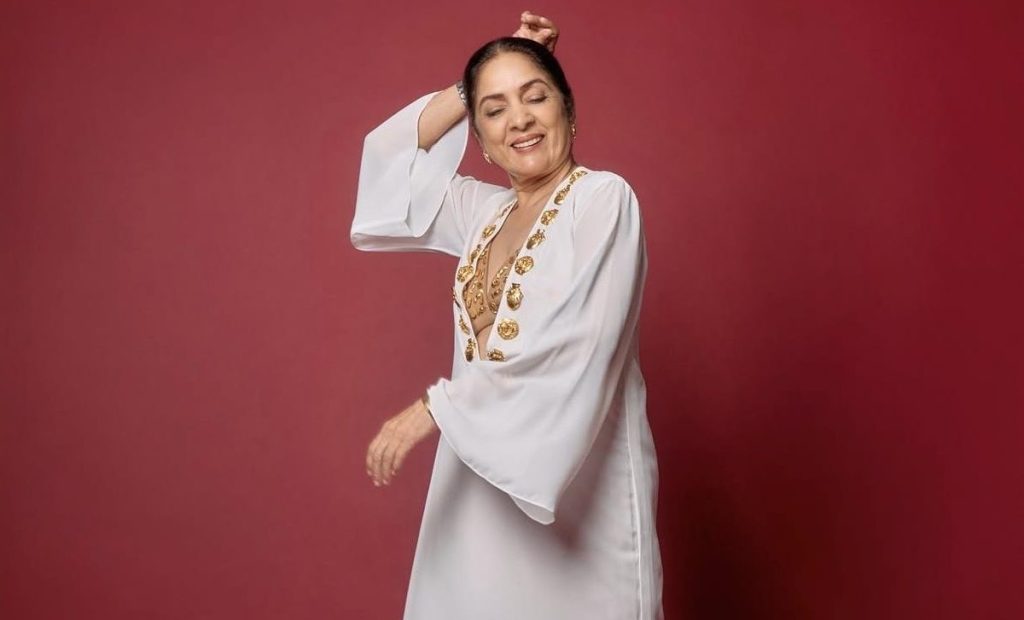
Somewhere between 40 and 50, women are quietly handed a new set of fashion rules. Less skin. Less trend. Less colour. Less trying. The problem is not that these rules are dated. It is that they were ridiculous to begin with.
There is a peculiar moment in a woman’s life when getting dressed stops being treated as personal taste and starts being discussed as risk management.
Is that skirt too short now? Is the print too young? Can you still wear a crop top? Should your jeans be less ripped? Is there an age at which sleeveless becomes inadvisable? Somewhere, apparently, an invisible committee has been meeting without us.
Fashion has always loved rules, largely because rules are excellent for selling women solutions to problems they did not know they had. But the idea of “age-appropriate dressing” becomes particularly persistent after 40. The language changes subtly. Clothes are described as elegant, flattering, forgiving, sophisticated. None of those words is inherently insulting. It is what they are often code for: conceal, minimise, behave.
And yet some of the most interesting fashion moments right now are being created by women old enough to have stopped asking permission.
The saree did not suddenly become a safe choice
At New York Fashion Week this month, 48-year-old Rani Mukerji attended Sabyasachi’s show in a black chiffon saree. There was nothing revolutionary about a woman wearing a saree. What was interesting was how striking the choice looked in a room designed for fashion spectacle. She did not attempt to compete with the noise. The saree, worn simply, looked more self-assured because of it.
Kareena Kapoor Khan, 46, recently did something similarly useful with leheriya. Her pastel saree nodded to the kind of ’90s Bollywood dressing many women in their 40s actually remember, rather than “discovering” through a moodboard. The result was not nostalgia dressing. It was evidence that the clothes we have history with can become interesting again when we stop treating newness as fashion’s only currency.
This matters because women in midlife are often offered two equally boring wardrobes. One asks us to chase youth. The other asks us to retreat into tasteful invisibility.
The problem with “flattering”
By 40, most women have spent decades being taught to dress around perceived flaws. Pear shape. Apple shape. Big arms. Small chest. Large chest. Tummy. Hips. Height. The body becomes a geometry problem and clothes are expected to perform corrective engineering.
There is practical value in knowing proportion and fit. A good tailor is still one of civilisation’s better inventions. But there is a difference between understanding what makes you feel good and believing every outfit must make you appear thinner, younger or smaller.
“Flattering” should be one possible objective, not the constitutional law of your wardrobe.
A woman may want an oversized jacket because she likes its shape, not because it defines her waist. She may want silver hair with a red lip, a mini with opaque tights, a huge pair of earrings, men’s trousers or a saree with a shirt. Clothes are allowed to be interesting before they are slimming.
Midlife can actually make you better at fashion
The great advantage of having dressed yourself for 20 or 30 years is data.
You know the shoes that will torture you by dinner. You know the neckline you keep buying and never wearing. You know whether beige makes you look expensive or exhausted. You know which “investment” handbags were genuinely useful and which spent five years being admired inside their dust bags.
That knowledge is not a limitation. It is taste becoming more precise.
Even the current trend cycle is moving in a direction that rewards this. Autumn 2026 fashion is full of pieces that rely less on looking conspicuously young and more on knowing how to style them: tailoring, suede, richer textures, unusual colour combinations, vintage references and clothes with longevity. International fashion coverage aimed at women over 50 has also begun making the obvious point that trend participation does not have to disappear with age. It simply becomes more selective.
Selective is useful. “Age-appropriate” is not.
Try a different wardrobe edit
Instead of asking whether something is too young for you, ask four better questions.
- Would I wear this if nobody knew my age? This catches the clothes you are rejecting because of an imaginary audience.
- Does it work with my actual life? A wardrobe for the person you really are will always beat one for the fantasy version who attends six cocktail parties a week.
- Do I like the garment, or do I like what it promises to fix? If the sales pitch is mostly about hiding your body, perhaps your body was never the problem.
- Does this still feel like me? Some things genuinely stop fitting our identity. Letting them go is evolution, not surrender.
There is freedom in realising you do not have to dress exactly as you did at 28. There is even more freedom in realising you do not have to dress like anyone’s idea of 48 either.
The best midlife wardrobe is not younger, safer or more expensive. It is more edited. It contains fewer apologies. It understands that personal style is allowed to change without becoming smaller.
Wear the saree because you love it. Wear the mini because you love it. Wear the enormous blazer that makes your mother ask whether it belongs to your husband. At this age, surely we have earned the right to disappoint an imaginary committee.
Images via Pexels | Used for representational purposes only




Leave a Reply