
A friend of mine was recently called in for an interview with a newly launched website for the role of a senior writer. She cleared the first two rounds, but the third round, which was supposed to be with the CEO, turned into an HR round where she was politely informed that the interview stands cancelled and she should stop following up. Perplexed, my friend tried reaching out to others in the company to know what went wrong. Officially she was told that the position was on hold. Unofficially, at 47, she was ‘too old’ to be considered. This is one of India’s largest multinational conglomerates. I don’t need to name the company to drive home the conversation that ageism is one of the biggest untold stories of corporate India.
Last year, a report released by WHO put India amongst a cluster of nations that account for the highest prevalence of ageism. As per the report, ageism is widespread across institutions, including those providing health and social care, workplaces, and the media. A survey of more than 83,000 people from 57 countries showed that at least one in every two people held ageist attitudes. These translate into the corporate world as discriminatory hiring practices, mandatory retirement ages, disrespecting or patronising older employees, keeping them out of decision making and refusing to teach them newer skill sets.

A recent story I worked on for The Midlife Crisis put me in touch with Shanthi Kasi, who decided to become an artist in her ’40s. One major challenge for her was dealing with ageism. “There are very few fellowships or residency opportunities for artists like myself who have taken up art as a profession later in life. I was rejected for the master’s program by Maharaja Sayajirao University (MSU) Vadodara. A senior faculty on the jury bluntly told me that younger artists have a long career ahead of them. Even for galleries, ‘age’ matters. A young person has, on average, 40 years ahead of them in the profession. One gallerist told me your work is good, but collectors evaluate based on an artist’s credentials—where you study, the scholarships you win, how long you have been practising in the field etc. For me, restricted opportunities coupled with older age is a double whammy,” she shared in an email interaction.
These are just two examples of a generation that widely faces unfair discrimination with no solution. While HRs and top management openly deny these practices, numbers tell a different story. Three years ago, International Business Machines Corp (IBM) was accused of firing over 1,00,000 older employees in the last few years as part of their effort to boost its appeal to millennials and appear as’ cool’ and ‘trendy’ a company as Amazon and Google (as stated in a deposition). A simple search on Quora shows a trail of complaints against IT companies not hiring employees after age 35. “Your chances of getting fired increase exponentially with age. The age bracket after 35 starts getting especially risky. This is because, by this time, an entire brigade of youngsters would have also come into the IT industry. This brigade is quicker at learning and is willing to work at a lesser salary than yours. So, the company will start seeing you as a liability on its balance sheet and would start looking for excuses to fire you,” explains a user.
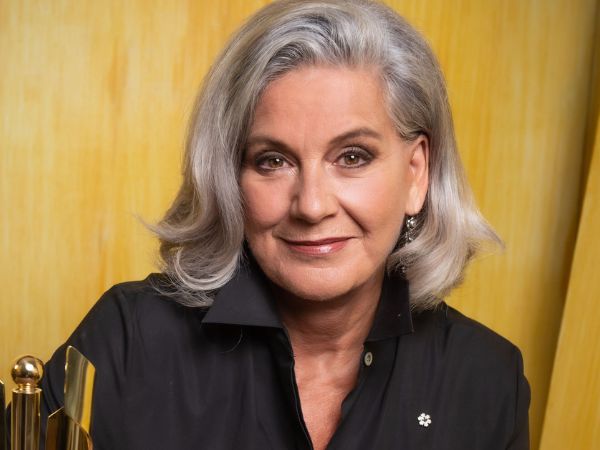
Over ten days ago, CTV National News anchor Lisa LaFlamme’s firing caused global outrage. As per employees, Lisa’s grey hair was one of the many reasons under discussion before being asked to leave after a decade of work. According to a report in the Globe and Mail from August 18, Michael Melling, a senior executive at CTV News, had “asked who had approved the decision to ‘let Lisa’s hair go grey”.
An article by HR Katha last year on whether ageism was rearing its ugly head in the Indian workplace has Naresh Kumar Puritipati, the Human Resource Director of Lactalis Group, stating the obvious. “Discrimination on the basis of age has always been there. It is not a new phenomenon. In the past, people within organisations simply tried to accommodate these discriminations and move on.” He further points out that senior people traditionally dominated the workplace in the past, so discriminatory behaviour was directed towards the juniors. “Now, things have changed. Any incidence of discrimination is magnified by youngsters, thanks to the wide reach of social media. Further, if they feel discriminated against and decide to leave, these youngsters have far more opportunities awaiting them in the market. It is the senior people who may be in the soup,” he explains.

The ageism gap, by far, is the widest in startups. While corporates continue to rely on experience to assign senior roles, the whole equation changes in startups where your founder could be the youngest person in the room. In an article published on LinkedIn, Albane Bressolle-Chataigner, Chief People Officer at Back Market and Judith Tripard, Head of Talent at Oh BiBi, talk about their experiences in a panel discussion where they were asked, ‘What would you suggest to a 50-year-old woman who wants to work in a startup?’. “Ageism runs even deeper than sexism and racism in startups. Ageism happens when age becomes part of a criteria that divides people or groups, resulting in disadvantages or prejudices. We assume that older workers lack flexibility and aren’t necessarily technologically savvy. This assumption is unfounded and lacks merit because the world is always changing, and we are forced to adapt constantly, whether working or not; old or young,” they write.
“Another myth is about the fact that older workers would not perform as well as younger workers: it has been proven that it was totally not true. The Cogito study (2010) compared 101 young adults aged 20-31 to 103 older adults aged 65-80 on 12 different tasks over 100 days. It revealed that older workers’ performance was more consistent over time than younger workers, making them better at solving problems. The scary thing is that we are all ageing, whether we want to or not. This means that it could affect us at some point in our lives. So let’s act collectively,” they add.

While the problem is significant, there’s not much that can be done. In India, there is no codified law on age discrimination, meaning there is no designated statutory body that can deal with such matters. Under the general Indian penal laws, no criminal sanctions are prescribed regarding age discrimination. In her article for Forbes India, published nine years ago, author Jasodhara Banerjee remarks, “We like to say we are a young country; we like to play the ‘demographic dividend’ card when everything else fails. Statistics do hold up the claim: 50 per cent of our population is less than 25 years old; 65 per cent is less than 35; we are younger than China, Brazil, Russia and the US. But we are also a country with severely entrenched notions of what one must do at a certain age. Perhaps the ancient Vedic philosophy of dividing life into four stages—Brahmacharya, Grihastha, Vanaprastha and Sanyas—has something to do with it, or perhaps the more recently entrenched practice of mandatory retirement.”
Mandatory retirement, Jashodhara notes, is unlawful in many countries. “Mandatory retirement is taken to be as much a fact of life as earning a livelihood. But, given the improving health and circumstances of our seniors, must it remain so? Mandatory retirement is unlawful in several countries—the US, the UK, Canada, Australia and Brazil—and employees are free to work for as long as they wish to. (There are exceptions for industries in which strict physical fitness levels are necessary.). In India, however, retirement has been a government tool to ensure employment for the young. So, government employees must retire at 60, while private ones largely do so. This also ensures that while judges must retire, lawyers need not, and while bureaucrats retire, lawmakers—unsurprisingly—do not: 40- and 50-year-olds are considered young in politics, and parliamentarians in their 70s and 80s are more the norm than the exception.”
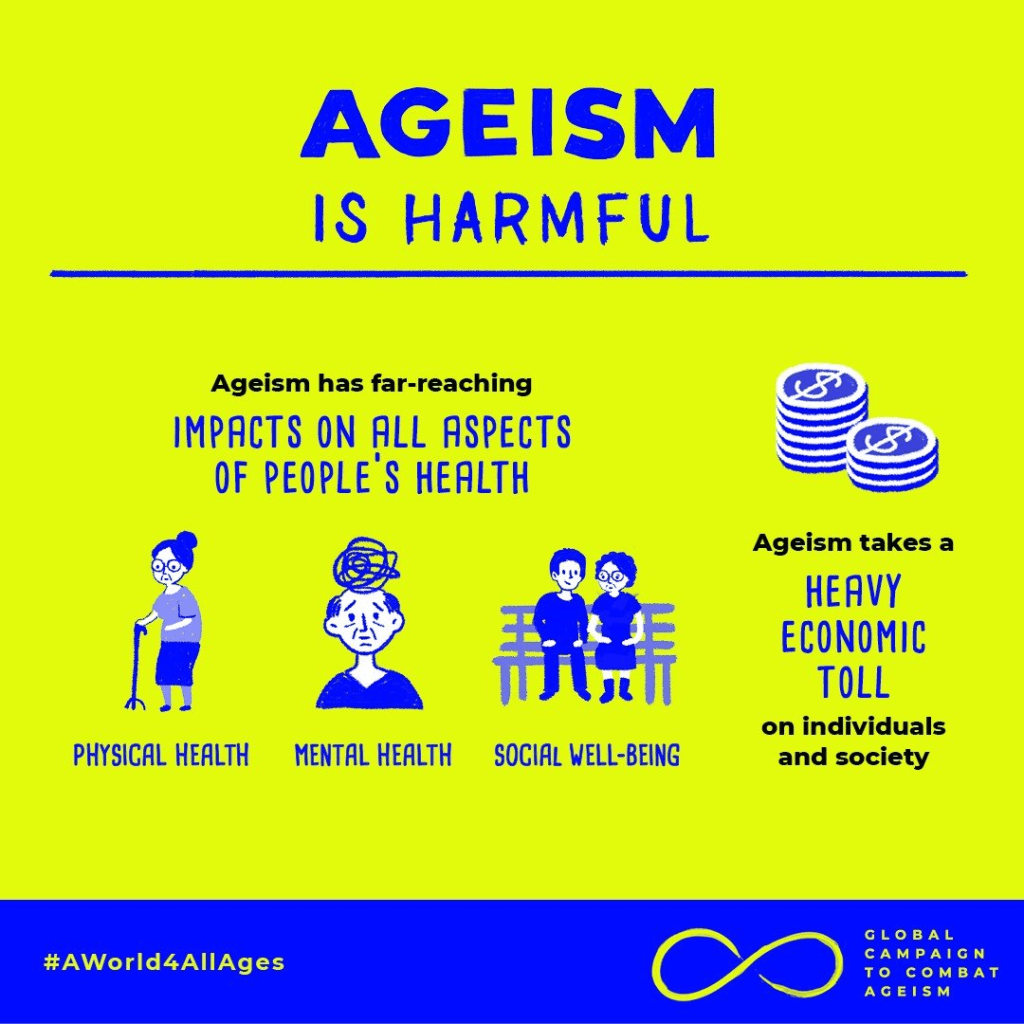
The effects of retirement do not end at a stop of income. Multiple pieces of research prove that people who work well into their ’60s have better emotional health than those who do not. “The underlying mechanism is that work is a symbol of personal identity and status and that leaving the labour market means losing identity or lowered status, which may reduce the level of mental health,” states an article published in The National Library of Medicine.
At the end of the day, the question is, what can be done? The only solution, at the moment, is social remedies. General awareness about ageism, refusal by the employees to sit and watch people getting discriminated against because of their age, and the use of social media to call out companies and their unfair practices seem to be the stepping stones to a more comprehensive solution. In an interview for Wonderlic, Weech, the author of the viral LinkedIn article, “Over 40 and Interviewing? Have these things happened to you?” states, “More people started becoming allies against racism in 2020, but by the end of 2020 we realized that it’s not okay to just be not racist, you need to be antiracist because if you’re not antiracist, you will not help stop racism. It’s the same thing with age discrimination.”
Remember, a good workplace is one where you can look around and see versions of yourself that you want to become. As a 36-year-old, I would love to work in a space that has a 46-year-old doing my dream job and giving me hope that it is indeed possible.
Have you faced ageism in the workplace? Let us know in the comments below.
Lead image by Antoni Shkraba via Pexels





Leave a Reply